6 Sep 2026
Crowd-sourced Performance Databases Reshaping Component Selection Strategies in Enthusiast PC Builds
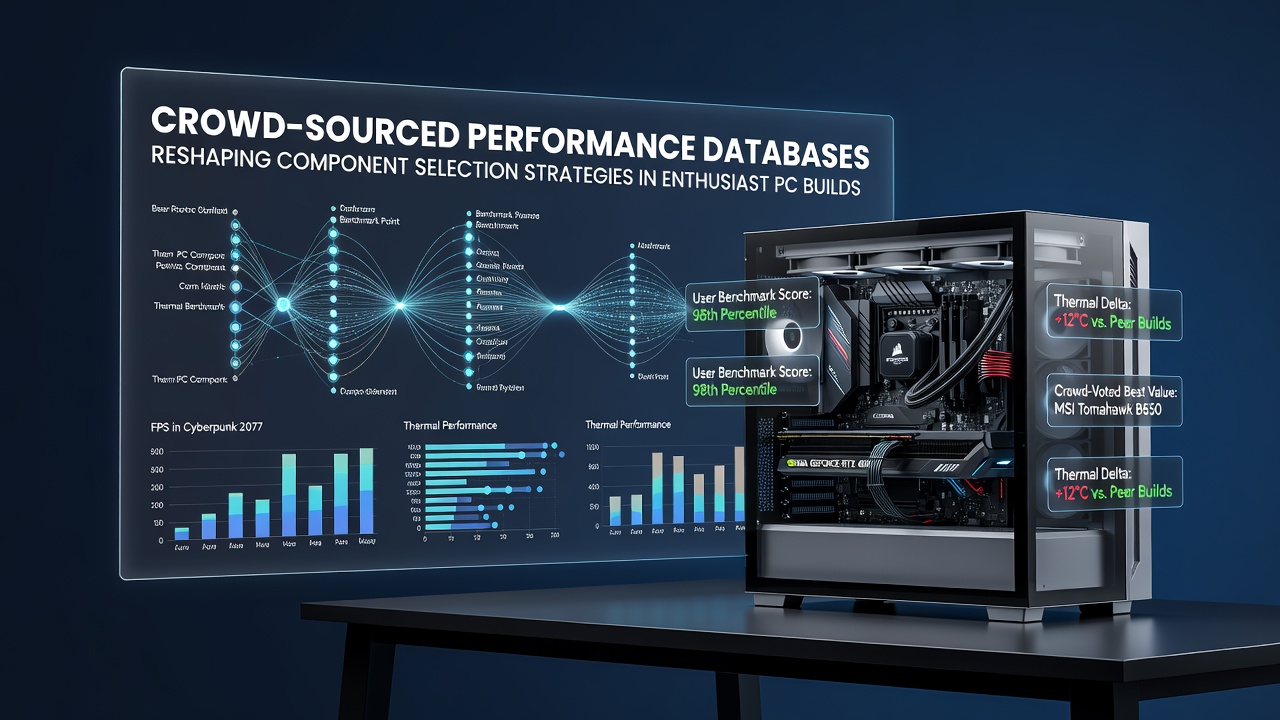
Enthusiast communities have developed extensive crowdsourced performance databases that aggregate real-world benchmark submissions from users across multiple hardware configurations, and these resources now guide component selection by providing comparative data points beyond manufacturer specifications. Participants upload results from standardized tests such as Cinebench, 3DMark, and custom workloads, which then feed into searchable repositories that track metrics like thermal throttling thresholds, power draw under sustained loads, and frame rate consistency across game titles.
Database Growth and Data Aggregation Methods
Contributors submit hardware details alongside test outputs through web platforms and dedicated applications, while automated validation scripts filter outliers based on statistical deviation from established norms for each component model. As of September 2026, several major repositories reported over 2.5 million unique submissions, with growth accelerating due to integration with monitoring tools that export logs directly from systems running Windows, Linux distributions, and custom firmware builds. Observers note that this volume enables granular breakdowns by factors including ambient temperature ranges, motherboard BIOS versions, and memory timings, allowing selectors to match components to specific use cases such as overclocking stability or multi-GPU rendering farms.
Shifts in Selection Workflows
Traditional reliance on review sites and vendor datasheets has given way to cross-referencing multiple database entries before purchase decisions, and builders now prioritize parts that demonstrate consistent performance across hundreds of user configurations rather than peak scores from controlled lab conditions. Researchers at the University of Toronto documented how these datasets reveal variance in silicon quality bins, prompting enthusiasts to favor models with wider community validation for critical roles like primary storage controllers or network interface cards. Data shows that selection timelines have extended in many cases because participants spend additional hours querying filterable views for compatibility patterns, such as PCIe lane allocation conflicts or radiator clearance in compact chassis designs.
Regional Data Patterns and Platform Integration
European contributors disproportionately document power efficiency metrics due to regional electricity pricing structures, whereas North American submissions emphasize raw throughput numbers in gaming scenarios; these geographic clusters create layered insights when merged. Industry organizations like the Japan Electronics and Information Technology Industries Association have referenced aggregated crowdsourced figures in public reports on component longevity, confirming trends in capacitor degradation rates across older GPU architectures. Builders access these insights through browser extensions that overlay database averages onto retailer product pages, and the process reduces mismatches between advertised capabilities and delivered results under typical enthusiast workloads.
Challenges in Data Reliability and Standardization
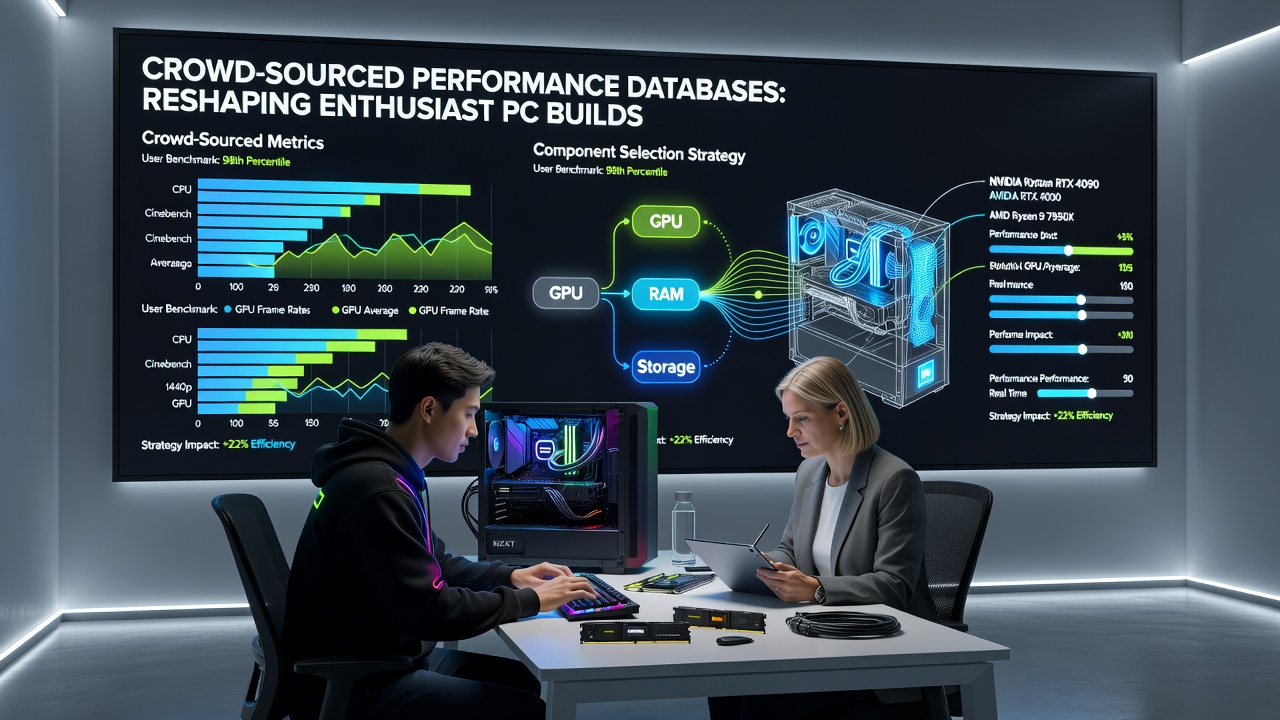
Variations in testing methodologies across submissions introduce noise, and maintainers apply weighting algorithms that prioritize entries with verified sensor calibration and repeated test runs to mitigate this effect. Academic analyses indicate that unfiltered datasets can skew averages by up to 12 percent on certain metrics when outlier cooling setups dominate results, prompting ongoing refinements in submission guidelines. Those who study these systems observe that integration with open-source benchmarking suites has improved consistency, since standardized scripts enforce identical test sequences regardless of user hardware.
Future Trajectories in Community-Driven Selection
Database operators continue expanding coverage to emerging interfaces such as CXL memory expanders and high-bandwidth storage protocols, while machine learning models trained on historical submissions predict compatibility risks for untested combinations. Evidence suggests these tools will further embed into procurement processes as more vendors publish reference designs that align with community-validated performance envelopes. The approach supports iterative refinement where new submissions update selection heuristics in near real time, closing the gap between theoretical specifications and observed behavior across diverse build environments.
Conclusion
Crowdsourced performance databases have established themselves as core infrastructure for enthusiast component selection by supplying empirical comparisons drawn from actual deployments. Continued expansion of submission volume and analytical tooling sustains this shift, delivering actionable intelligence that complements and sometimes supersedes traditional information sources in guiding build decisions.