20 Sep 2026
Player Telemetry Data From Fighting Game Tournaments Drives Custom Hitbox Adjustments to Minimize Input Variance in Regional Qualifiers
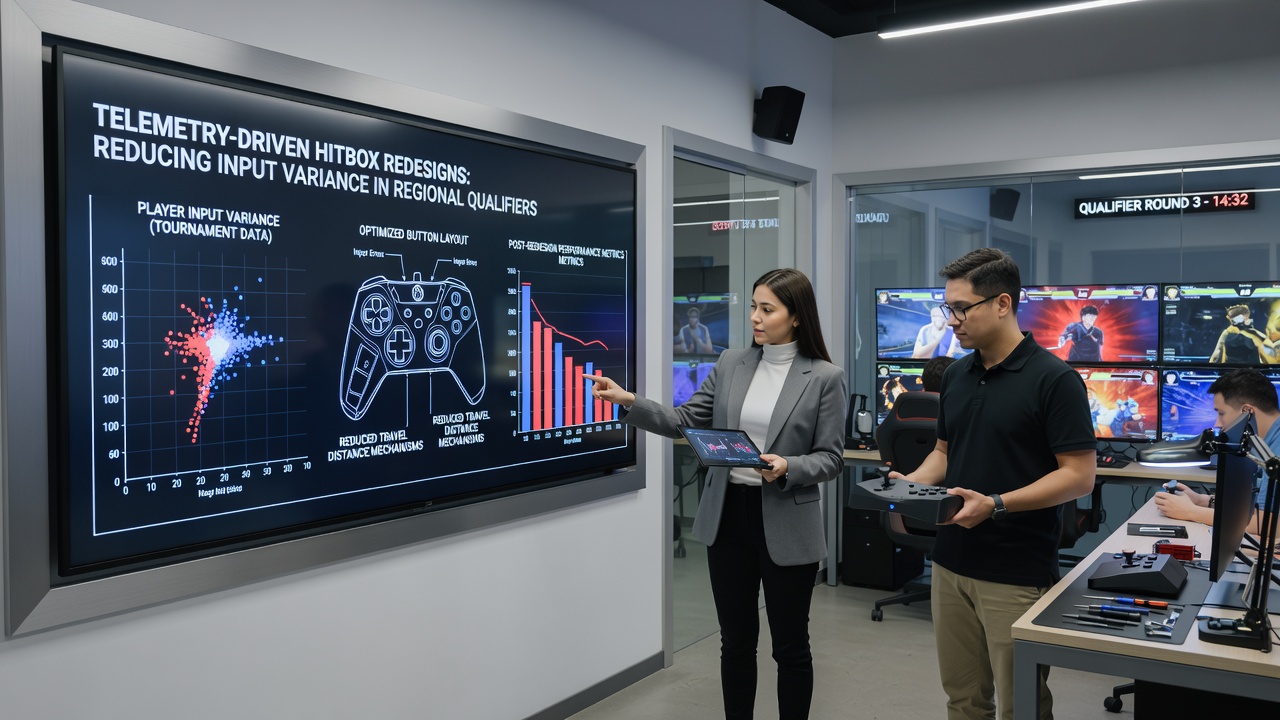
Competitive fighting game circuits collect detailed player telemetry during major events, and organizers track button press timings, directional inputs, and execution consistency across thousands of matches. These datasets reveal patterns in how competitors interact with custom hitbox controllers, which replace traditional joysticks with button-based movement systems. Researchers at institutions like the University of Tokyo's esports analytics lab have documented how slight variations in button spacing and actuation force contribute to inconsistent dash inputs or special move executions during high-pressure rounds.
Telemetry Collection Methods in Tournament Settings
Event staff install sensors on hitbox devices at venues such as EVO Japan and regional circuits in North America, while data streams capture frame-accurate timestamps for each input. Software tools log the exact milliseconds between button presses during combos, and analysts cross-reference these logs with match outcomes to identify clusters of variance. In September 2026 qualifiers for upcoming global brackets, organizers noted elevated input delays on certain custom layouts when players executed rapid quarter-circle motions under time constraints.
Key Metrics Tracked During Matches
- Actuation timing deviations measured in milliseconds across repeated inputs
- Directional consistency rates for forward dashes and back dashes
- Button travel distance variations that affect rapid-fire sequences
- Player fatigue indicators visible through slowing input speeds in later rounds
These metrics feed into redesign cycles where engineers adjust hitbox plate layouts and switch types before the next set of regional events. Data from European tournaments organized under the FGC Europe banner shows that players using modified button clusters achieved tighter execution windows after incorporating feedback from prior telemetry reviews.
Redesign Process Informed by Tournament Insights
Custom hitbox manufacturers examine aggregated datasets to reposition buttons that show high variance rates, and they test new configurations in controlled lab environments before deploying updates. One study from a Canadian research group at the University of Waterloo examined over 50,000 input events from Street Fighter qualifiers and found that angled button placements reduced execution errors by measurable margins in side-to-side movement commands. Engineers then iterate on switch weights and debounce timings to align physical feedback with the timing windows observed in successful tournament runs.
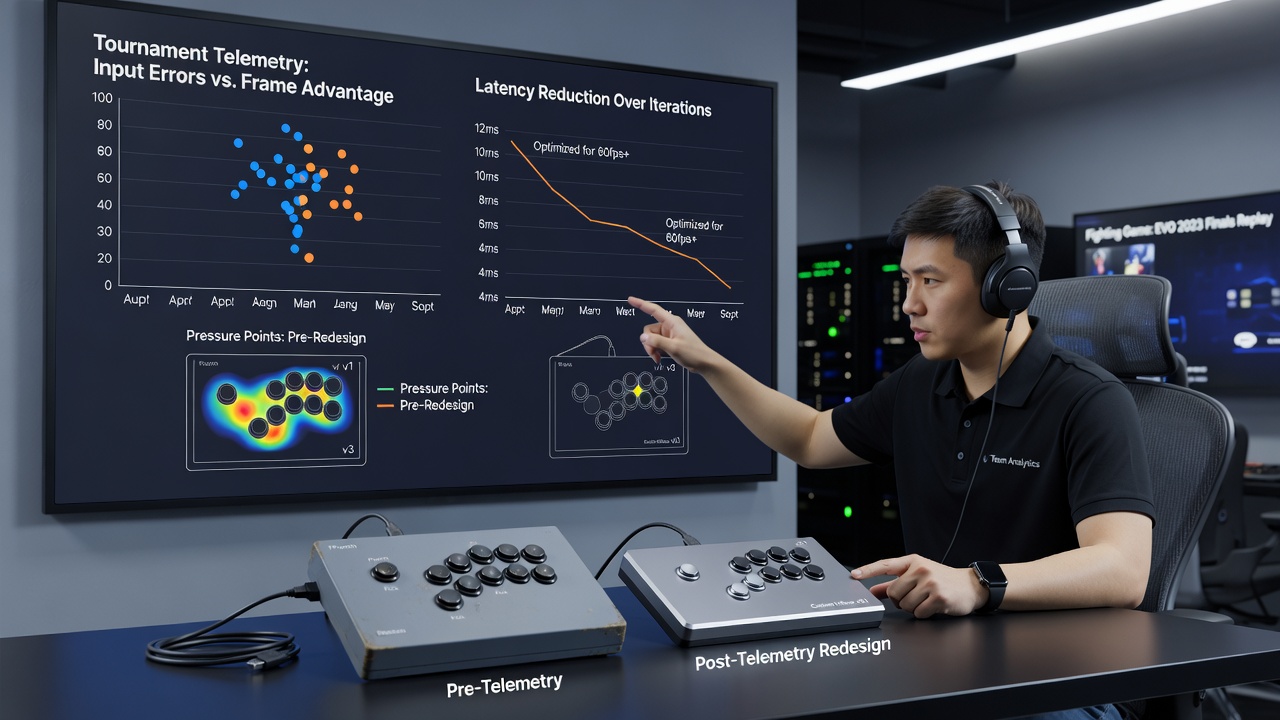
Regional qualifier participants receive updated prototypes fitted with revised layouts, and subsequent matches provide fresh telemetry to validate improvements. Observers note that communities in Australia and Southeast Asia share calibration profiles derived from these same datasets, allowing players in smaller scenes to benefit from patterns identified at larger events.
Impact on Input Consistency Across Regions
Reduced variance appears in follow-up data when redesigned hitboxes enter circulation, and frame data comparisons demonstrate tighter clustering around optimal input timings. Figures from the Asia-Pacific Fighting Game Association indicate that participants using telemetry-guided modifications maintained steadier performance across best-of-five sets during 2026 qualifier cycles. Teams coordinate with academic partners to model how environmental factors like venue temperature interact with controller hardware, leading to further refinements in material choices for button caps and base plates.
Analysts continue to monitor how these changes propagate through amateur scenes, where players adapt professional layouts for their own devices. Shared repositories compile anonymized telemetry excerpts that help regional organizers standardize equipment checks ahead of major brackets.
Conclusion
Tournament telemetry continues to shape iterative improvements in custom hitbox designs, and the resulting adjustments support more predictable input delivery during regional qualifier play. Ongoing collaboration between data analysts, hardware developers, and fighting game communities sustains this feedback loop across multiple continents.