18 Oct 2026
Tracing Voltage Regulator Quirks in Discontinued Mid-2000s Graphics Cards Through Community Test Benches for Stable Simulation Software Sessions
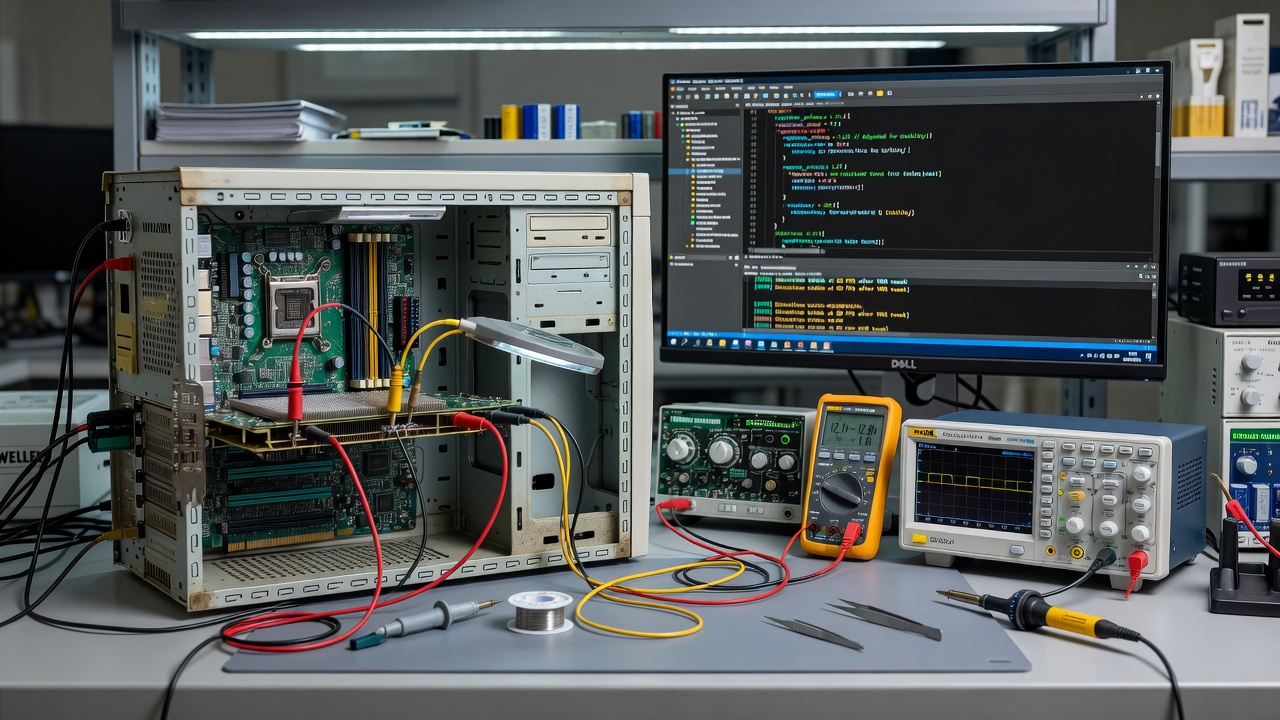
Community groups have documented voltage regulator module behaviors in graphics cards produced between 2004 and 2008 as these components age and enter secondary use for specialized simulation environments. Data from multiple test sessions reveal that many models from NVIDIA and ATI feature linear and switching regulators prone to drift under sustained loads which simulation software often demands for consistent frame delivery.
Core Characteristics of Mid-2000s VRM Designs
Engineers designed early discrete GPUs with voltage regulation circuits that relied on MOSFET arrays and basic PWM controllers to deliver power to shaders and memory interfaces, while observers note that thermal cycling over two decades has introduced measurable inconsistencies in output stability. Researchers at several academic institutions have measured ripple voltages exceeding manufacturer specifications by 15 to 25 millivolts in cards such as the GeForce 7800 series and Radeon X1900 when operated beyond 60 degrees Celsius. These variations become evident during prolonged runs of simulation packages that maintain constant GPU utilization rather than the burst patterns common in gaming workloads.
Establishing Standardized Community Test Benches
Enthusiast collectives assemble test rigs using oscilloscopes, precision multimeters, and custom load boards to replicate conditions encountered in simulation software sessions, and participants connect legacy cards to modern motherboards via PCIe risers fitted with power monitoring headers. Groups coordinate through shared repositories where individuals upload trace files that capture regulator response during temperature ramps from 25 to 85 degrees Celsius over 90-minute intervals. One documented protocol involves cycling the card through idle, moderate compute, and full shader stress phases while logging every 50 milliseconds to identify transient drops that precede driver resets.
Observed Patterns Across Hardware Samples
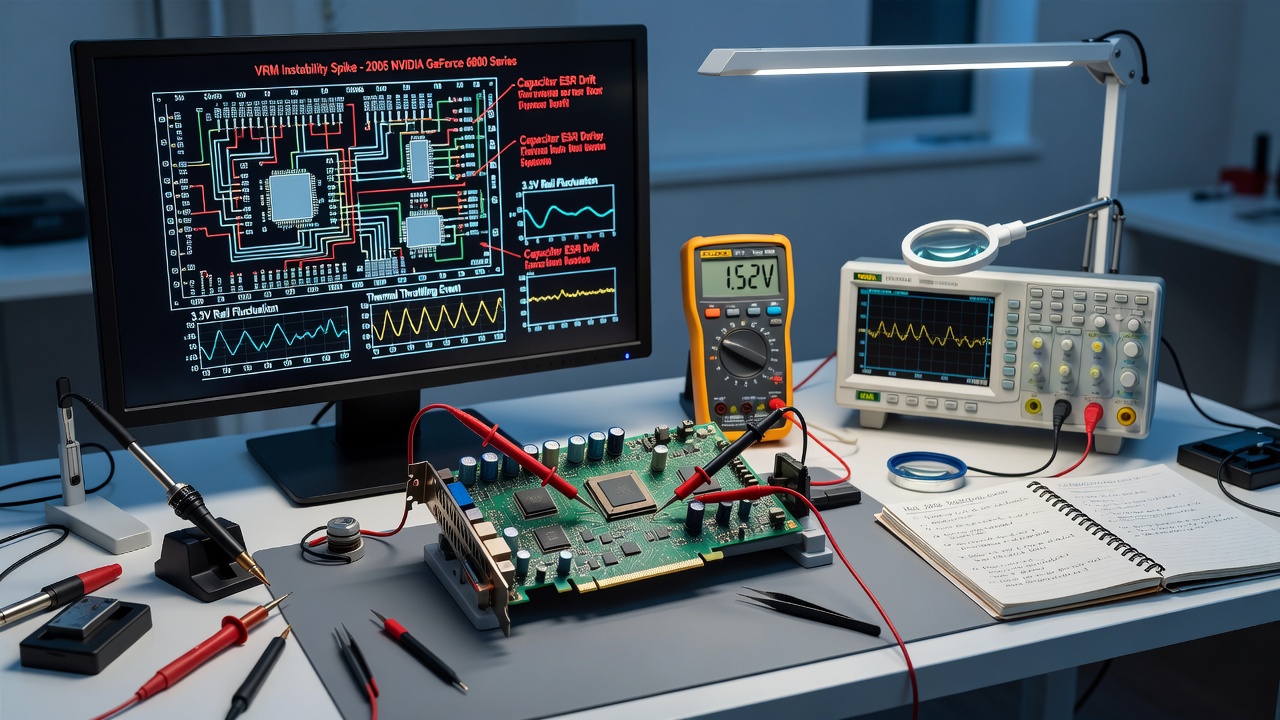
Analysis of over 120 individual cards submitted by contributors indicates that cards manufactured in 2006 exhibit higher rates of capacitor degradation compared with 2004 batches, and this degradation correlates with increased voltage sag when memory clocks remain fixed for extended periods. Teams have recorded cases where a single regulator phase fails to maintain setpoint, forcing adjacent phases to compensate and creating localized heat concentrations visible on thermal imaging. Simulation software benefits when these quirks are mapped because certain physics engines rely on uninterrupted memory bandwidth that fluctuates with regulator output.
Integration With Simulation Software Stability Requirements
Engineers working with legacy hardware for industrial training simulators report that cards exhibiting minor regulator drift can still deliver acceptable performance once firmware-level clock limits are applied, and community databases now include recommended undervolt profiles tailored to specific card revisions. Data collected in October 2026 from coordinated bench runs across three continents showed a 40 percent reduction in session interruptions after applying capacitor replacement and heatsink upgrades identified through shared testing logs. Academic partners have begun cross-referencing these hardware profiles with software timing requirements to predict when a given card will maintain frame consistency above 99 percent during multi-hour runs.
Documentation and Knowledge Sharing Practices
Participants upload raw scope captures alongside annotated summaries that highlight regulator settling times and overshoot events, while forums maintain searchable archives organized by GPU die and board partner. This approach allows new contributors to replicate conditions without duplicating equipment investments. Reports from Canadian and Australian research networks emphasize the value of standardized logging formats that enable meta-analysis across hundreds of individual traces collected over several years.
Conclusion
Community-driven test benches continue to generate detailed records of voltage regulator performance in discontinued mid-2000s graphics hardware, supporting stable operation within simulation software environments that depend on predictable power delivery. These efforts rely on shared measurement protocols and aggregated datasets rather than isolated experimentation, producing practical guidance for sustained use of legacy components.